Ashiya has a reputation that precedes it by decades: Japan's most exclusive postal code, the address where Kansai's oldest industrial and merchant families have quietly kept their estates for generations. That reputation is accurate, but it also causes a specific, recurring confusion among foreign renters — the assumption that "Ashiya" automatically means "unaffordable," full stop, and therefore not worth even looking at. It's a reasonable assumption, and it's wrong often enough to be worth correcting. Ashiya's rental market and Ashiya's ultra-premium ownership market are, in practice, two almost entirely separate worlds, and only one of them requires generational wealth to enter.
The Ashiya that shows up in features about Japan's wealthiest families is centered on the hillside districts climbing toward the Rokko mountain range — wide, quiet streets, walled estates on plots of several hundred square meters, properties that almost never reach the open market and change hands through family succession and private introductions rather than listings. That Ashiya is genuinely closed to almost everyone, foreign or Japanese, without long-standing local relationships.
The Ashiya that actually rents apartments to working professionals, couples, and families is a different, much more accessible city built around JR Ashiya, Hankyu Ashiyagawa, and the streets in between — flatter, denser, closer to the coast, and priced like a well-connected, well-regarded Hanshin-corridor city rather than a private enclave. This is the Ashiya worth actually considering, and it's the one this article is about.
Ashiya's geographic position, roughly midway between Osaka and Kobe along the Hanshin corridor, is arguably its single most practical asset. Rapid services from JR Ashiya reach both JR Osaka and JR Kobe/Sannomiya in around twenty minutes, and with the Hanshin and Hankyu lines also running through the city, there are effectively three separate rail options into either city center. Few addresses in the Kansai region offer that kind of dual-city convenience — most commuter towns pick a primary direction and accept a longer trip the other way. Ashiya genuinely doesn't have to choose.
Around the main stations, studio and one-room units start in a range broadly comparable to solid mid-market Osaka neighborhoods rather than anything resembling luxury pricing — this is not a city where a single professional needs an exceptional budget to get a foothold. The price curve steepens sharply once you move up in size: family-sized 2LDK and 3LDK units command a meaningfully higher premium than the equivalent floor plan would in Amagasaki or Itami, reflecting Ashiya's pull for families who want the address, the schools, and the walkable, low-density streets, and are willing to pay specifically for more space rather than for square-meter luxury finishes. In practical terms, Ashiya rewards renters who don't need much room and can be a genuine stretch for those who need a lot of it — which is worth knowing before you start comparing floor plans against a Namba or Umeda search.
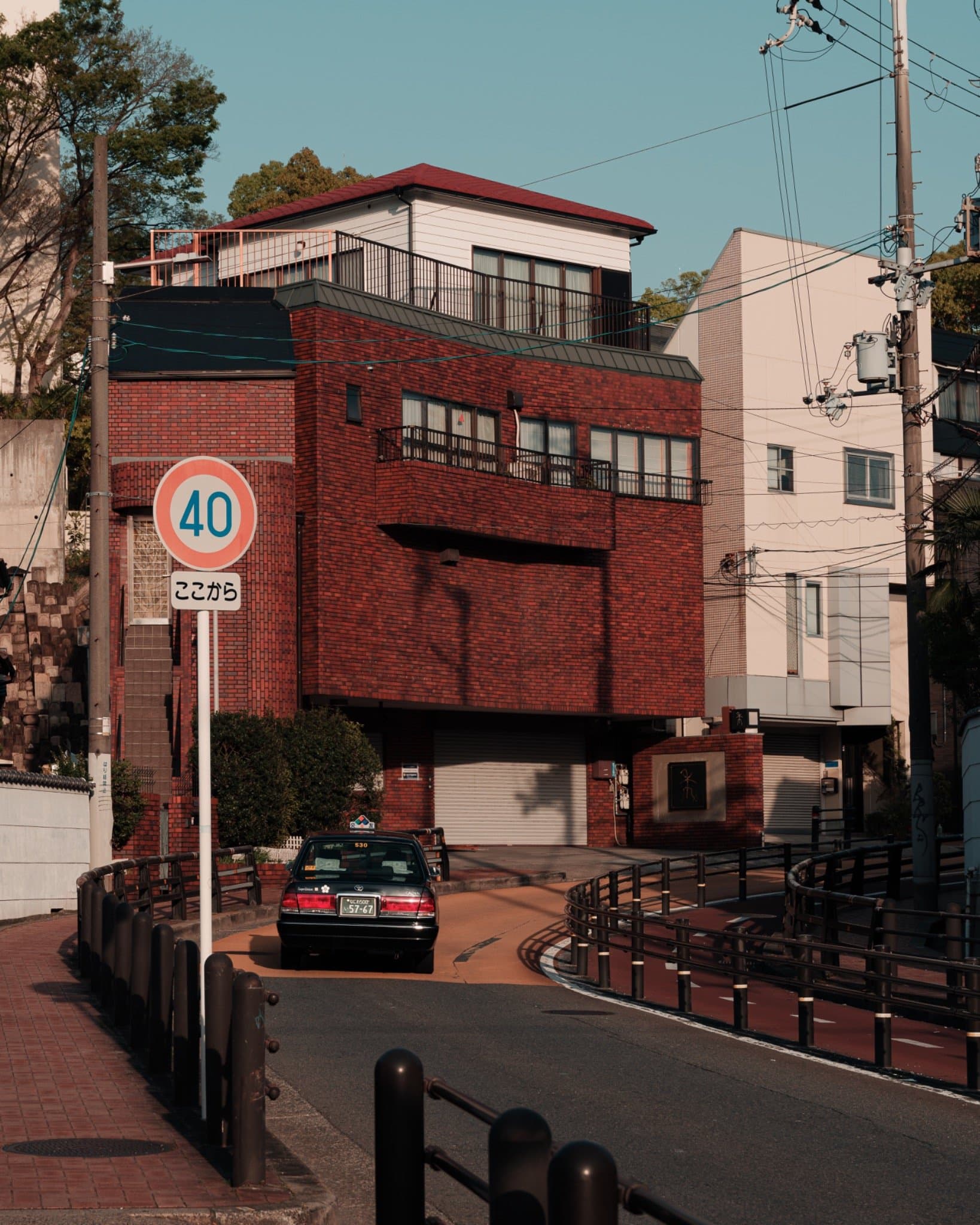
One of the more unusual things about Ashiya, and something almost no other city we cover does to the same degree, is that it enforces strict aesthetic ordinances on its own streetscape. Rooftop advertising and neon signage are prohibited across large parts of the city, and in the most exclusive hillside zones — Rokurokuso-cho among them — utility lines are run underground and commercial development is tightly restricted. The effect, walking through central Ashiya, is a visual calm that's genuinely unusual for a Japanese city of its size: no flashing signage competing for attention, no utility poles cutting across the sightline of a residential street.
This matters for renters in a very practical way: it's part of why Ashiya feels distinctly different from neighboring cities even in its more ordinary, rentable neighborhoods, and it's a large part of what residents are actually paying for when they choose an Ashiya address over a functionally similar commute from somewhere less regulated. It's not marketing language — it's zoning policy that's been enforced consistently for decades.
Ashiya has a longer history than most Hyogo cities of hosting international residents, and it shows in the infrastructure: multilingual public facilities, a meaningful concentration of international schools in the surrounding area, and cultural exchange programming that a lot of comparably sized Japanese cities simply don't invest in. For families relocating with school-age children, this is often the deciding factor over price — Ashiya's schooling options and general familiarity with foreign residents reduce a category of friction that shows up constantly in less internationally established cities.
None of this removes the language layer from the rental process itself, though. Lease terms, landlord expectations, and the practicalities of what a given management company will and won't accept from a foreign tenant are still conducted overwhelmingly in Japanese, and Ashiya's older, more established landlords — particularly outside the newest buildings — are not always the most flexible audience for a first-time renter navigating the process without support.
It's a poor fit for anyone assuming the entire city carries Namba-adjacent nightlife or expecting studio-apartment pricing at family-apartment sizes — Ashiya was never built around either.
As with every city we cover outside Osaka's prefectural border, Ashiya sits in Hyogo, and the same practical consequences apply: registration happens at Ashiya City Hall rather than an Osaka ward office, and the guarantor companies, management firms, and landlord relationships that an Osaka-focused agency has spent years building don't automatically carry over. Ashiya adds its own specific wrinkle on top of that general pattern — a number of its more established landlords and smaller local management companies have limited, sometimes cautious experience with foreign tenants, precisely because the city's older housing stock has historically turned over within long-term Japanese resident networks rather than through the open portals foreign renters typically use. Knowing which buildings and management companies are genuinely comfortable with international tenants, versus which only appear that way on a listing site, is exactly the kind of distinction that's very difficult to make from outside the market.
Ashiya's rental market rewards exactly the kind of local, building-level knowledge that its reputation as an exclusive address tends to obscure — there is a genuinely accessible city here, sitting right next to the one that almost never appears on the open market, and the two are easy to confuse from the outside. If Ashiya's commute, schools, or streetscape make it a serious contender for your move, the most useful next step is a direct conversation about which parts of the city, and which landlords, actually fit your budget and profile — rather than assuming the address puts it out of reach before you've even looked. We're happy to walk through that with you, in English, French, or Japanese.