Ask a Japanese person what Takarazuka means to them, and most won't mention real estate at all — they'll mention the Takarazuka Revue, the all-female musical theater troupe that's been filling a purpose-built theater in the city since 1914 and has become one of the most distinctive cultural exports Kansai has produced. That's a fine reason to visit. It's a slightly unexpected place to start when you're actually apartment hunting, but it turns out to matter more than you'd think — because a city that has spent a century building its identity around a single, beloved cultural institution has also, almost as a side effect, built itself into one of the more livable, family-oriented commuter towns within reach of both Osaka and Kobe.
Takarazuka sits at the northern end of the Hanshin corridor, where the Muko River valley opens up between hills, giving the city a genuinely different physical character from the flat, dense sprawl of central Osaka or the coastal squeeze of Kobe. The Takarazuka Grand Theater and the surrounding Hana no Michi promenade anchor the area around Takarazuka Station, and the tourism infrastructure that's grown up around a century of Revue performances — hotels, restaurants, a steady flow of visitors on performance days — gives the city center a level of amenity and polish that a lot of comparably sized commuter towns simply don't have.
Beyond the theater district, Takarazuka is a genuinely large municipality by area, stretching from the dense station-front neighborhoods up into hillside residential zones and out toward the Nagao Mountains, which means the character of the city shifts considerably depending on which part of it you're actually looking at — a distinction that matters more here than in most of the compact cities we cover.
Takarazuka is served by both the Hankyu Takarazuka Line and the JR Fukuchiyama Line (JR Takarazuka Line), giving it two independent rail options into central Osaka. Hankyu's limited express services reach Osaka-Umeda in roughly thirty minutes, while JR rapid services offer a broadly comparable trip time into Osaka Station with the added advantage of continuing on toward Amagasaki and beyond. For Kobe, the JR line connects through toward Sannomiya, while Hankyu and connecting services provide an alternative route — meaning that, much like Ashiya further south, Takarazuka gives commuters genuine flexibility toward both major Kansai cities rather than locking them into a single direction.
It's a longer commute than the more central Hyogo cities we've covered — Amagasaki or Itami will get you into Umeda faster — and that's an honest trade-off, not something to gloss over. What Takarazuka offers in exchange is space, a lower price point for that space, and a physical environment — hills, a river, genuine greenery within the city limits — that the more central commuter towns can't match.
Because Takarazuka sits further from central Osaka than Amagasaki, Nishinomiya, or Ashiya, its housing stock skews toward family-oriented apartments and standalone houses rather than the compact, single-occupant-focused buildings common closer to the city core. This is a city where a family looking for a genuine 3LDK or a small house with a yard tends to find noticeably more options, at a noticeably lower price, than an equivalent search closer to central Osaka or Kobe — a straightforward function of distance from the two employment centers, rather than any deficiency in the city itself.
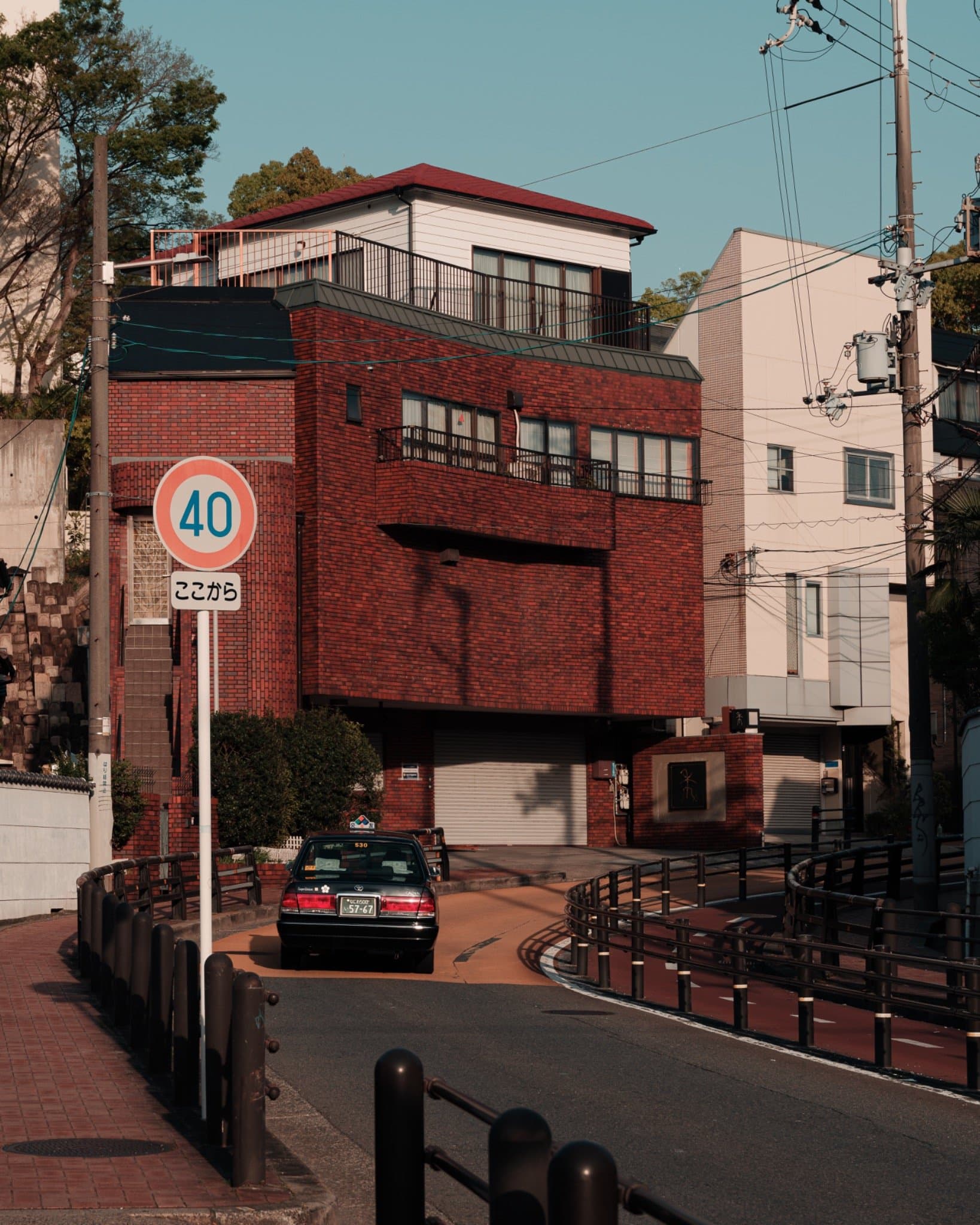
The hillside residential districts, developed in waves from the postwar period through the 1980s as commuter suburbs, offer some of the more spacious, garden-adjacent housing in the wider Kansai region for the price. Areas closer to Takarazuka Station itself carry the usual premium for proximity and the additional pull of the theater district's amenities, but even there, prices tend to sit below what a comparable location would command inside Osaka's city limits.
Takarazuka's civic identity leans heavily into family life and outdoor recreation in a way that shapes daily living beyond the theater. The city runs family-oriented parks, sits close enough to hiking terrain in the Nagao and Rokko foothills to make weekend outdoor activity genuinely convenient rather than a planned excursion, and hosts a well-regarded municipal zoo and botanical facilities that give families with young children a steady rotation of nearby things to do without a long train ride.
The Revue itself, while primarily a tourism draw, also shapes the character of the immediate station area — a level of restaurant and hospitality quality clustered around Hana no Michi that punches above what you'd expect from the city's size, sustained by a century of regular visitor traffic rather than needing to be built from scratch.
It's a weaker fit for anyone whose priority is the shortest possible door-to-desk commute into central Osaka, or who wants the density and nightlife of a more central address on their doorstep.
Takarazuka carries the same cross-prefectural realities as the other Hyogo cities in our coverage — registration through Takarazuka City Hall rather than an Osaka ward office, and guarantor companies and management firms that don't automatically overlap with an Osaka-focused agency's usual network. Because the city spans such a wide area, from dense station-front streets to hillside suburbs, the local knowledge that actually matters here is less about a single prefectural line and more about understanding which of Takarazuka's many distinct pockets — riverside, hillside, theater-district, outer suburb — genuinely fits a given renter's commute tolerance, budget, and lifestyle. A listing's address alone won't tell you which of those categories you're actually looking at.
Takarazuka rewards renters who are willing to trade a few extra minutes on the train for genuinely more space, more greenery, and a city with a real cultural identity of its own — not simply a bedroom community stapled onto Osaka's edge. If that trade-off sounds right for your situation, the most useful next step is a direct conversation about which part of the city actually fits your commute tolerance and your budget, rather than guessing from a map. We're happy to walk through the options with you, in English, French, or Japanese.
Foreigner-friendly. Bilingual. Exclusive listings.
Contact us today and move in within 2 weeks.
We have a curated selection of properties for rent and for sale across Osaka.
View properties


